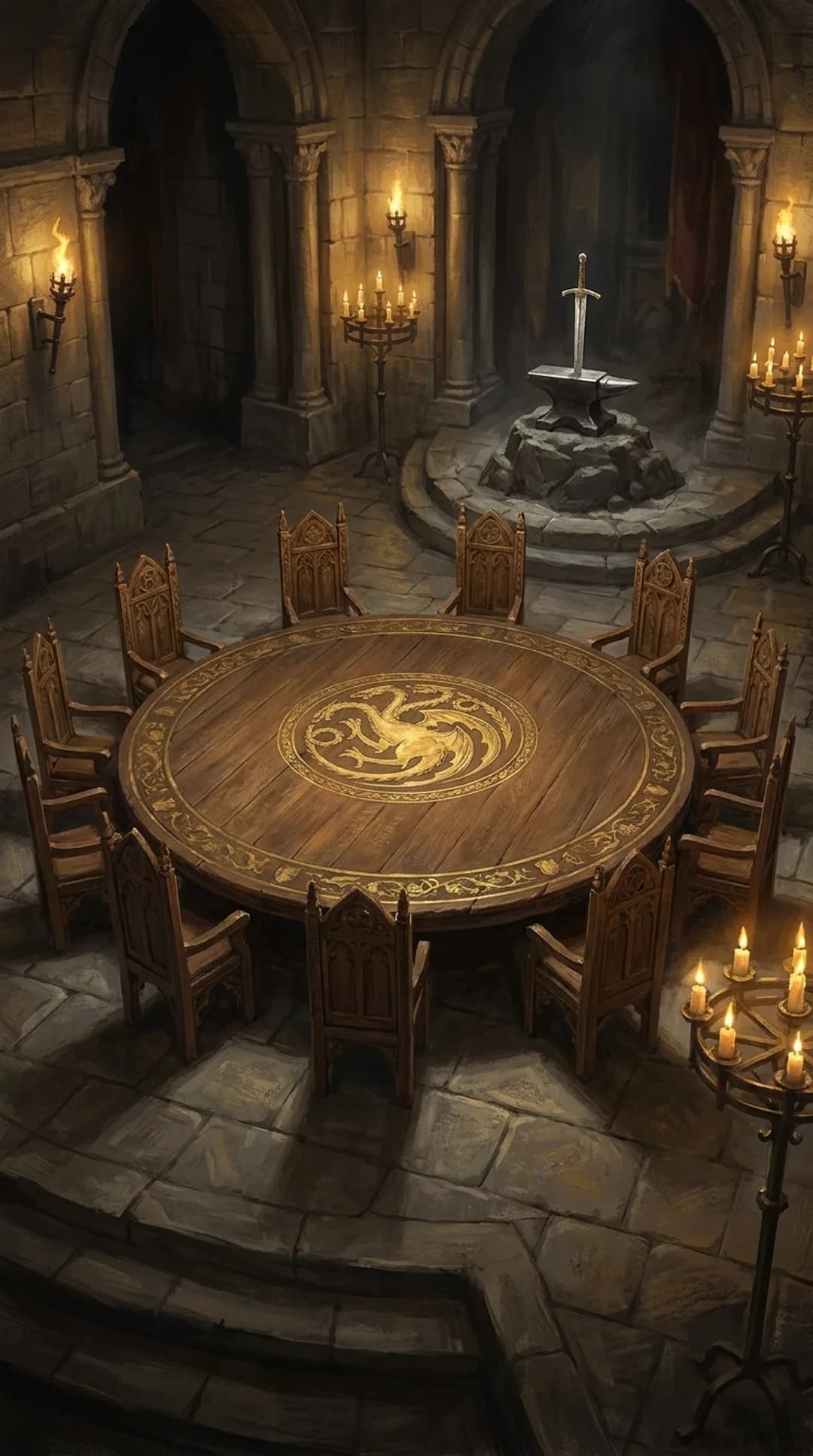
Camelot · The Matter of Britain · ~3 min

Which Knight of the Round Table?

Ten questions from the Arthurian cycle. Arthur, Lancelot, Gawain, Galahad, Percival, Tristan, Mordred, Bedivere. Mr. Quill keeps the seat-roll.

Camelot · The Matter of Britain

Which Knight of the Round Table Are You?

Ten questions drawn from the Arthurian cycle. The Grail quest. The siege at Joyous Gard. The final battle at Camlann. Mr. Quill scores you against the eight knights who matter most — Arthur, Lancelot, Gawain, Galahad, Percival, Tristan, Mordred, and Bedivere.

The Matter of Britain

The Arthurian cycle — what medieval scholars called "the Matter of Britain" — is a 1,500-year-old conversation between dozens of authors. The earliest references to Arthur (Nennius's Historia Brittonum, c. 830) describe him as a real warlord of post-Roman Britain. By the 12th century Geoffrey of Monmouth had turned him into a quasi-historical king. By the 13th century French romances had reinvented him as the head of a chivalric order. By 1485 Thomas Malory's Le Morte d'Arthur had become the canonical English version. Modern adaptations from T.H. White through the BBC keep reshaping the figures.

Why the Cycle Still Works

The Round Table is the medieval West's most enduring myth because it asks a real question: can a community of equals hold together? The answer, in every version, is no. The institution corrodes from inside. Lancelot loves Guinevere. Mordred carries Arthur's hidden sin. The Grail quest pulls the best knights away and they come back diminished. The fellowship of the Round Table is a vision so beautiful that knights kept trying to live up to it for centuries, and it kept failing.

This is why the personality archetypes still land. Each knight in the cycle represents a way of trying — and a way of failing. Lancelot is excellence with a hidden flaw. Galahad is purity that completes itself by leaving. Gawain is honor that does what it said it would even when terrified. Bedivere is loyalty that survives the institution itself.

Frequently Asked Questions

How many knights were at the Round Table?+

There were never exactly twelve. Different sources list 12, 25, 50, 150, or more. Malory's Le Morte d'Arthur mentions 150. The number was symbolic, not bureaucratic. Our quiz includes the eight knights who carry the most narrative weight — Arthur himself, Lancelot, Gawain, Galahad, Percival, Tristan, Mordred, and Bedivere.

Is this based on real history?+

Arthur may have been a real post-Roman British war leader of the 5th-6th century. The Round Table, the knights, the Grail quest, and the rest are medieval literary inventions — built up over centuries by Welsh, French, German, and English writers between roughly 830 (Nennius) and 1485 (Malory). The 'historical' Arthur is largely lost. What we have is the legend.

Why include Mordred? He's the villain.+

Mordred is the necessary darkness in the cycle. He's Arthur's illegitimate son by his half-sister Morgause — and in many versions, Arthur didn't know they were related when she was conceived. Mordred carries the consequences of Arthur's hidden failures. He's a real personality archetype — the inheritor of a grievance, the dark mirror of the father — and recognizable even without endorsement.

What's the difference between Galahad and Percival?+

Both achieve the Grail in different versions of the cycle. Galahad is the perfect knight — son of Lancelot, raised by nuns, holy from birth. Percival is the holy fool — raised in the woods, ignorant of knighthood, somehow stumbles into greatness anyway. They represent two different theological models: holiness as already-complete vs holiness as journey.